 简体中文
简体中文  English
  阿拉伯语
阿拉伯语 


Surface inspection test blocks
Surface inspection test block
Shandong Ruixiang Mold Co., Ltd. produced aluminum alloy type A test blocks, three-point type B test blocks, and five-point type B test blocks in accordance with the requirements of JB/T6064-2015 and NB/T47013-2015 standards. The crack lines of the test blocks are clear and the display is intuitive, enabling accurate testing of the ability of the penetrant inspection agent and the penetrant inspection process to detect tiny defects.
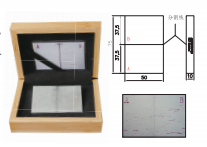
※ Aluminum alloy type A test block (Reference test block for aluminum alloy quenching cracks)
The aluminum alloy type A test block is divided into two parts, A and B. The surface is dotted with irregularly distributed open cracks with widths less than 3 μm, ranging from 3 μm to 5 μm, and 5 μm. There should be at least 2 open cracks less than 3 mm in length on each surface. The total number of cracks on a single surface should not be less than 4.
Under normal circumstances, it is necessary to test whether the penetrant meets the requirements, and to compare the advantages and disadvantages of the two types of penetrants to evaluate the suitability of the penetrant testing method for non-standard temperature conditions.

※ Three-point B-type test block (chromium-plated radiating crack reference test block)
The three-point B-type test block is made of S30408 stainless steel plate, with single-sided chromium plating. On the chromium-plated surface, there are three radiating crack zones from large to small, with significant differences in the length and diameter of the crack zones, which are not easily visible to the naked eye. It is mainly used to test the sensitivity of the penetrant testing agent system and the correctness of the operation process.

※ Five-point type B-type test block (chromium-plated radiating crack reference test block)
The five-point type B test block is made of S30408 stainless steel plate, with single-sided chrome plating. The 152mm × 57mm area is sandblasted. There are five radiating cracks on the chrome-plated surface, ranging from large to small, with significant differences in the length and diameter of the crack zones, which are not easily visible to the naked eye. These are used to test the sensitivity of the penetrant testing agent system and the correctness of the operation process.
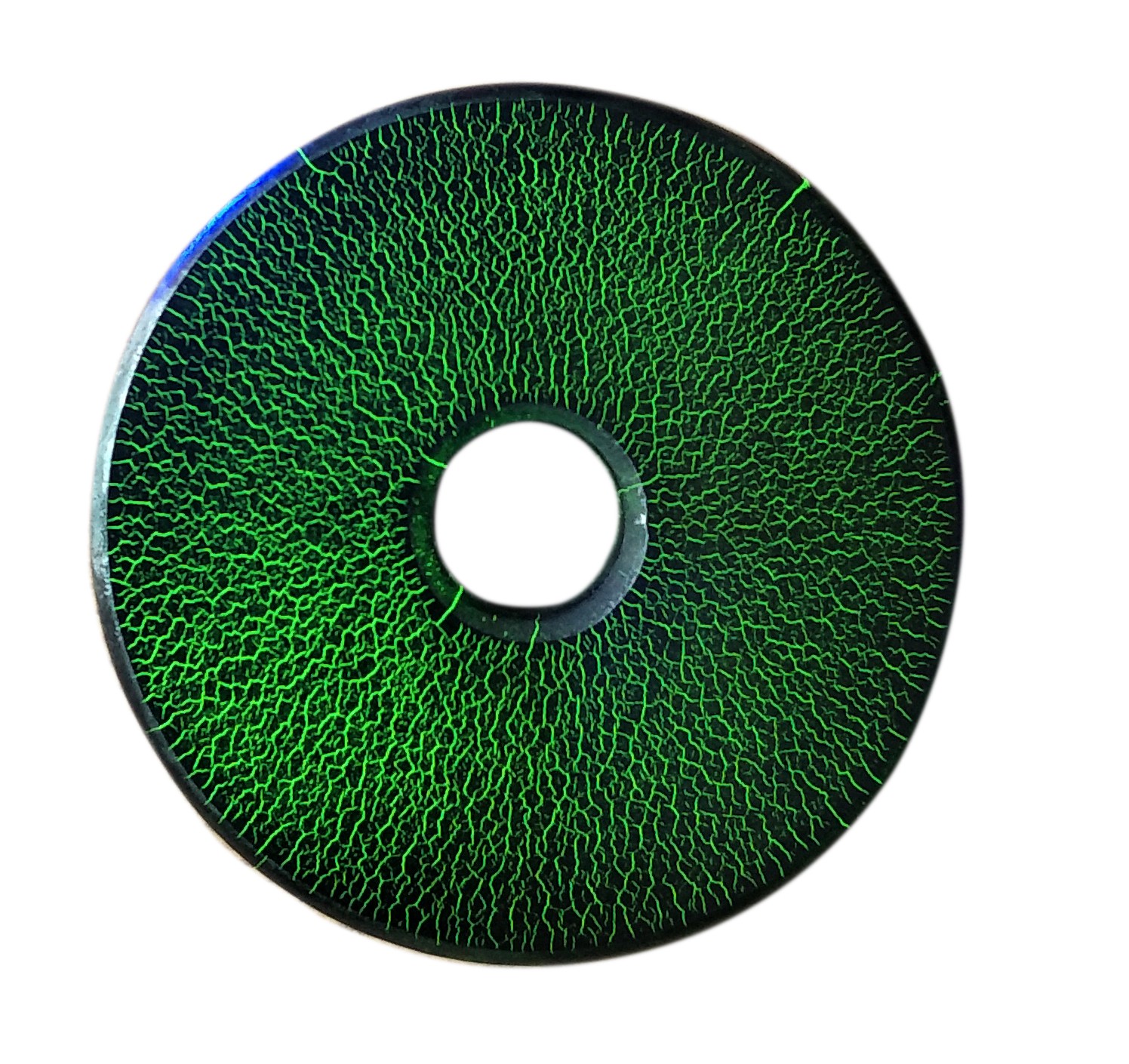
※ Type I magnetic particle testing block
In GB/T15822.2-2016 "Non-destructive Testing - Magnetic Particle Testing - Part 2: Testing Medium" and JB/T6063-2006 "Non-destructive Testing - Magnetic Particle Testing Materials", type reference blocks are specified to evaluate the performance of the magnetic particle medium.
The standard stipulates that the type reference test block is a circular test block with two natural cracks on its surface. It is made of high alloy and, after being magnetized using the center conductor method, has a relatively high residual magnetism. The surface of the test block is blackened, making it suitable for fluorescent magnetic particle testing. The two natural cracks on the surface of the I-type reference test block are produced by different processes. One is the quenching (stress) crack generated during high-temperature quenching, which is relatively coarse in shape. The other is the grinding crack produced on the surface of the test block during grinding. These cracks are relatively small in shape and mostly in a cracked state.